Showing posts with label utopia. Show all posts

Thursday, 15 August 2013

The Structure of the Book

The first major decision that I had to make about Utopia/Dystopia was about the actual form of the book itself. At the beginning, I was considering a number of options, including the creation of two books (either as completely separate codices or bound together in a dos-à-dos fashion) one entitled 'Utopia' and the other 'Dystopia'; I was also considering putting two volumes together in one volume, in such a way that the book could be read starting from either the back or front, with some parts rotated 180 degrees in relation to others, ideas I had previously experimented with in some of my hand-made books (particularly the book-poem 'Lily'). However, as I read and researched, these approach seemed to me to be both facile and inadequate; it quickly became obvious that the observation that 'one person's Utopia is another person's Dystopia' was not merely a witty bon mot; in fact, the concept of Dystopia had arisen largely out of satire and critical re-interpretation of the concept of Utopia, and thus to separate out the concepts was meaningless, and did a disservice to the understanding of both.

So, I went in search of other structures. As previously stated, in my last book, Vectis, I used a structure that was taken from nature. This was appropriate to a piece that dealt with the natural world. Since Utopia/Dystopia dealt with works of fiction, it seemed like it might be a good idea to try and derive some sort of structure from a work of fiction. I looked at a number of works, including The Republic, Utopia and Gulliver's Travels, as well as works not obviously linked to the themes such as Don Quixote, Ulysses and 120 Days of Sodom but failed to find anything that seemed promising. The only remnant of these ideas that made it into the final work is the titles of the ten sections of the chapter 'Heaven/Hell' which are named after the circles of hell and heaven in Dante's Divine Comedy.

The idea for the current section titles came when I decided that Utopia/Dystopia, which had up until that point been a working title, would serve as the final title. This false dichotomy, along with some of the directions my thinking had been taking, suggested the division into sections with similar names. Just as the distinction between Utopia and Dystopia was unclear, so I wanted the distinction between the others to be unclear. At first, they seem to suggest a very definite, black and white view of the universe, with one set of concepts (such as Sex, Heaven and Order) associated with Utopia and the other (such as Death, Hell and Chaos) associated  with Dystopia; however, the slippage between the two concepts in the title suggests a slippage between the other concepts as well, and this is further suggested and explored constantly throughout the book, in both subtle and obvious ways. The order, number and names of the sections was subject to change until fairly late in the project; at first, the section entitled Order/Chaos did not exist, and there was a section entitled Art/Science. At this stage, the book was ordered into six chapters:

Heaven/Hell
Sex/Death
Drugs/Religion
Magic/Politics
Culture/Nature
Art/Science

With Sex/Death and Culture/Nature being visual essays (the decision to explore this form in more depth was one I had taken early on). As you can see, this order is somewhat different from the finished article, as is the contents. The first thing I did, once I had written out this scheme, was begin to write a stream of consciousness to guide the research and content creation for each section. This is the stream for Heaven/Hell:

Utopia as a concept. Thomas More. Atlantis. Connecction to the Christian concept of Millennialism. Requirement for apocalypse. The Antichrist. Hassan I Sabbah. Similarities between the legends of the Hashashim and Al Qaeda. The Power of Nightmares – Islamic terrorism as a convenient myth. Evidence of a Manichean worldview. Christian dialogues of the eternal war of good vs. evil. William Blake-Visionary, book design. Jerusalem.  Christian intentional communities. Diggers. Branch Davidians. Conspiracy theories, as further expression of the Christian apocalyptic worldview. Satan as the ultimate conspiracist. Protocols of the Elders of Zion. The political utility of conspiracy theories via the enablement of demonization. Nazism, the roots of fascism and its intimate connections to futurism. Futurist Manifesto.  Non-western visions of Utopia.
As you can see, this is extremely different from what actually ended up in the book, and gives some sense of how vast the subject I chose to tackle is.

Once I have decided on the general form of a book, the first thing I do is to lay it out in a very rough form in Adobe InDesign, to get a sense of the flow. Initially, I was planning on printing and binding Utopia/Dystopia myself (This proved impossible, and was, I think, always something of a pipe dream; honestly, it would require twice the allotted time of an MA unit to adequately undertake such a task), thus, my schemes for the length of each section were taking into account the physical structuring of the book. My first plan was for a book of 340 pages, with two 20 page long sections (consisting of separate quires of 5 sheets each, perhaps in a different paper) bookending a main section of 300 pages, containing 5 quires of 15 sheets, each being 60 pages. Heaven/Hell and Art/Science were to each have their own quire, and the shorter length of the Sex/Death and Culture/Nature sections would allow the break between Drugs/Religion and Magic/Politics to fall exactly in the centre of the book. I created a crude model of this structure to help me visualise the book. As I began to work on the book, and think about the structure of the fore and aft sections, this gradually changed to become a total book length of 332 pages, with 83 sheets arranged in two quires of 16 and thee of 17 sheets, before this general concept was completely abandoned. The final book is significantly shorter than this early version, the ideas contained within edited and condensed. Using a size of A5 pages (and A4 sheets) seemed natural given the printing technology on hand, not to mention my long-standing, nigh-on mystical love affair with the ISO 216 system of paper sizes, which I consider to be one of the most elegant and perfect things ever designed by humanity. As it turned out, practical considerations eventually forced me to have the book printed in the similiar, though subtly inferior, US Trade sizing. The conversion of the book to this size, however, was achieved by simply extending the coloured bars at the size of each page out a fraction, leaving the actual contents intact in A5 size formatting, which I considered to be a suitable compromise.

The process of refining this structure into the one found in the final book was, as previously stated, quite lengthy. The first major change was the addition of the Order/Chaos chapter. The first concept of this chapter bears no relation to what ended up in the book; it was originally intended to be a short chapter found directly in the centre of the book, between the Drugs/Religion and Magic/Politics sections, and to be distinct in design and feel from the other sections; building on the ideas of Vectis, I was considering a photographic record of two walks, arranged side by side, one considering my home town as a dystopia, the other as a dystopia, accompanied by a poem. This was intended to function as a 'palette cleanser' or intermission in the middle of the book, but the concept never quite gelled, and as the book developed further seemed to fit in less and less. Eventually, Order/Chaos was moved to the end, to function as some sort of coda, at the same time as the rest of the book was restructured. Art/Science was removed, and the chapter titles were re-ordered, with a commensurate change in which would be a visual essay and which something else. What this coda would actually consist of was up in the air for a long time. At one point, it was to contain an essay about the nature of digital art, intended to be allegorical towards the main subject, but it became clear that that subject was both too big and too unrelated to the central theme; instead, what I created will form the core of what I hope to be my first big post-MA personal book project, tentatively entitled A Technical Manifesto of Digital Painting. The decision to make Order/Chaos a visual essay was the last major change to the structure of the book, apart from the introduction of the 'spacers' containing the faded Utopia and Dystopia logos between the sections. These were derived from some of the book-structuring theories of Keith Smith, essentially functioning as 'internal endpapers' for each section, enforcing the fact that each is intended to be able to stand alone (though obviously they are strengthened by the others). For a brief while, I considered the possibility of binding each section, and the introduction and after sections, as seperate saddle-stitched books with their own covers, and placing them in a box so they could be re-ordered and read in any order (a slightly more conventional version of Marcel Deuchamp's Green Box) but decided against it; I also considered including numbers for each chapter and suggesting that a roll of the dice decide the reading order, a nod to Stéphane Mallarmé's Un Coup de Dés Jamais N'Abolira Le Hasard (A Throw of the Dice Will Never Abolish Chance) and also to the pleasing connection between Choose Your Own Adventure books and Jorge Luis Borge's concept of The Garden of Forking Paths, Borges being a recurring theme in my work. Eventually, however, I began to realise that the work would be stronger if it built on itself in a conventional way. Thus, the internal endpapers; initially, these only took up two pages between the chapters, but I realised that, when considering the book as a physical object being read, it would be more pleasing and significant to have to actually turn a leaf between each section.



Thursday, 9 May 2013

Visionary Environments


What makes a visionary environment?

First it generally embodies in some way the principle of Gesamtkunstwerk, or 'total artwork'. It should not just be a building, realised using traditional methods, but should include the totality of its environment, often including landscaping and interior furnishings, if any. Visionary environments tend to blur the boundaries between sculpture and architecture, and between craft and art. At the very least, the term describes a work that transcends or transgresses, in some way, the accepted definitions of architecture, sculpture, land art etc.

Secondly, it seems to be generally agreed that it should represent the vision (if not the labour) of a single individual, and it should be sui generis, existing outside of the aegis of a wider artistic movement. Thus, art nouveau buildings such as the Watts Chapel, Castel Beranger and the Stoclet House, though apparently sharing many of the features of visionary environments, are generally not considered to be examples of the genre. Similiarly excluded is the tradition of folly building, as well as romantic architectural fantasies such as Strawberry Hill and Neuschwanstein Castle. We should perhaps question whether this is done on any sound intellectual basis, or simply reflects a not always accurate identification of visionary environments with untutored creators, working outside of the mainstream artistic tradition.

For, despite a strong association with naïve and outsider art, the creators of works recognised as visionary environments are not always lone eccentrics. Many of the works of the Catalan architect Antoni Gaudi (particularly the Park Güell and the Sagrada Familia) are often considered as part of the genre, as are the architectural works of the Austrian artist Friedensreich Hundertwasser. Both artists were formally trained and recognised as significant creative forces within their own life-times. We can, perhaps, gain a clearer picture of what is generally thought to constitute a visionary environment if we understand the reason for their inclusion. In both cases, their works are marked by extreme idiosyncracy, and give the appearance of a certain naïvete, eschewing traditional mainstays of western architecture (most notably symmetry and straight lines). Both had their own reasons for doing this, Hundertwasser's being the most interesting in terms of the subject of Utopia and Dystopia. Growing up as a Jew hiding as a Christian during the Nazi regime in Austria, Hundertwasser developed a particular understanding of, and detestation for, totalitarianism in all its forms. Seeing the importance that a certain sort of architecture (rigid, monumental, imposing, neo-classical) had for fascism, he developed the supposition that he could create a form of architecture that, by eschewing regular geometry and incorporating pre-existing features of the environment (such as trees, which he allowed to grow through the roofs and walls of his structures), could in some way discourage people's impulses towards totalitarianism, and disrupt totalitarian control of the built environment. If, therefore, we take the narrow definition, sometimes proposed, that visionary environments should not only represent one idiosyncratic vision, but primarily be created to satisfy a need created by that vision, Hundertwasser falls by the wayside.

This definition highlights one glaring art establishment omission from most lists of visionary environment creators: the German dadaist Kurt Schwitters who, in 1923, began the lengthy process of transforming large parts of the ineterior of his home into an artwork which he initially called 'The Cathedral of Erotic Misery', but which he later, and more famously, began referring to as the Merzbau ('Merz Construction'1). It is difficult to understand what it is precisely that seperates this work from examples such as Ferdinand Cheval's Le Palais idéa, except Schwitter's artistic credibility. Indeed, we could argue that the untutuored Cheval is actually a more astonishing, powerful and authentic creative force than Schwitters (we are allowed to make such arguments because there is a fairly good chance Schwitters would have agreed wholeheartedly).
Generally, therefore, we must note that the term 'Visionary Environment' contains the same problems as we have previously identified with the term 'Outsider art'. But what does all this have to do with Utopia and Dystopia?

Essentially, we can see the Visionary Environment as a concrete form of Utopia. The Utopian writer looks around themself, sees an imperfect world and writes a book in which it is better. The visionary environmentalist mixes a bag of lime mortar and gets cracking. Whilst this directness and passion may seem entirely admirable, however, it also serves to highlight, in a very dramatic way, the core problem of Utopia. The visionary environment is the vision of one person only, and very often it is only one person who will ever be able to fully and comfortably inhabit it. Everyone else is simply a spectator at best. The anarchist writer Marcel Proudhon famously argued that 'property is theft'; by this he chiefly meant land; and there is no more spectacular and absolute way of claiming ones ownership and utter dominion over a patch of land than creating a visionary environment within it.

Utopia, it seems, may be pretty, but it is also antisocial.


1Merz was a meaningless term used by Schwitters to describe his artwork, taken from a fragment of a cut-up newspaper used in one of his early collages , “Commerz und Privatbank. This the correct english transation would be 'Merce'

Tuesday, 19 March 2013

Potential Sources

A list of literary works to consider, grouped loosely under the headings of Utopia and Dystopia:

UTOPIA

Francis Bacon - New Atlantis
Jorge Luis Borges - Tlön, Uqbar, Orbis Tertius
Margaret Cavendish - The Blazing World
Robert Heinlein - For Us, The Living
Plato - The Republic
Thomas More - Utopia
Franci Rabelais - Gargantua
B.F. Skinner - Walden Two
Henry David Thoreau - Walden; or, Life in the Wood
HG Wells - Men Like Gods
Tao Yuanming - The Peach Blossom Spring Story

DYSTOPIA

Margaret Atwood - The Handmaid's Tale
Ray Bradbury - Fahrenheit 451
John Brunner - The Sheep Look Up
Philip K. Dick - Flow My Tears, The Policeman Said
E.M. Forster - The Machine Stops
Aldous Huxley - Brave New World
Franz Kafka - The Trial
Ursula K. LeGuin - The Lathe of Heaven
Alan Moore - V For Vendetta
George Orwell - 1984
Yevgeny Zamyatin - We

Saturday, 16 March 2013

The Vision and the Void

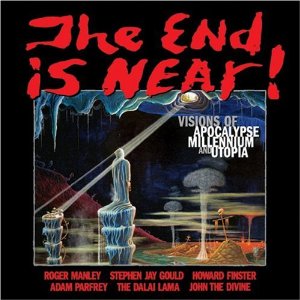
To begin my research I have taken a few books out from the University library that seemed broadly relevant to the topic. The first of these that I will write about, and probably the one that has inspired the most in-depth response from me in relation to its length, is:

Manley, R. (1998) The End is Near!: Visions of Apocalypse, Millenium and Utopia. Los Angeles: Dilettante Press. ISBN 0966427270

This book is essentially a catalogue of an exhibition held at the American Visionary Art Museum in Baltimore from May 1997 to May 1998. The exhibition focused mainly on 2d work, particularly paintings, and thus misses out on the entire outsider genre of Visionary Environments, which are very relevant to the Utopia/Dystopia project, as they often represent concrete attempts to actually create a perfect world, rather than simply offer a window to heaven or hell.

As with all outsider art or 'art brut' that finds its way, by whatever means, into the fringes of the 'official culture' ( of which museums, books held in university libraries must be held to be a part) there are a lot of uncomfortable questions to be asked here about prurience, the romanticisation of mental illness, and good old fashioned exploitation. Some revel in this; the book includes an essay by Feral House's Adam Parfrey, a man who in his gleeful revels in the dark underbelly of culture has ended up dedicating his life to the confused (and so stereotypically right wing American) belief that being extremely reactionary is the same as being radical. A failure to recognise that some extremists beliefs are not so much outside the American mainstream as tributaries of it; that it is much more common to see a right wing extremist on television than it is a left-wing artist, for much the same reason it is more common to see a ufologist or an alternative therapist than a bona fide scientist. There is a suggestion in Parfrey's essay (which is, admittedly, balanced out with none other than the Dalai Lama) that, by not criticising the bizarre fundamentalist, sexist and racist beliefs that drive many of the artists featured in this book, that they have been given fair treatment which society has denied them. Like the Manichean narratives of the apocalypse artwork, this tries, like many less sophisticated counter-cultural visionaries, to construct a worldview in which everything that is 'official' is bad and everything that opposes the official is good. All others ethics are swept to one side, and though people like Parfrey claim to simply be showing hard truths that others would like to ignore, in fact they present a cartoonish worldview, defined by that which they claim to oppose in much the same way that Satanism is defined by Christianity, and act as legitimisers for neo-fascists, fundamentalists and other unpleasant extremists.


Monday, 11 February 2013

Utopia Wordsearch

One of the first ideas that came to me in thinking about Utopia/Dystopia was the Utopian wordsearch, a first draft of which sits below:


Dropbox download link

The Utopia Wordsearch operates much like a normal wordsearch except that words cannot cross over or share any letters. Thus, choosing any words will block out certain others; each competing vision of utopia is incompatible with all other visions. In order to construct a utopia, differing points of view must be excluded. The methods that might be used to exclude these viewpoints blur the lines between utopia and dystopia.

Thursday, 31 January 2013

Dreaming of a Better World...


For thousands of years, since at least the writing of Plato’s Republic (and possibly before) people have crafted visions of utopia: imaginary perfect worlds or lands. These utopias tend to embody the principles of a lifestyle, system of philosophy or politics that is favoured by the author. We can state, broadly, that all visions of utopia, whether designed for practical realisation or not, carry within them a polemic purpose, if only in the way they contrast with the current condition of the world. The utopia, therefore, is an inherently political form of literature; it offers us a vision of the world as it could be, if only we embodied its virtues and lived by its principles. However, attempts to realise utopian visions in the real world have either had only limited success, or have been spectacular and unsettling failures.

Unfortunately, the number of potential ‘perfect’ worlds is practically infinite. There are not just the different visions of perfection that have been held by each individual person who has ever lived, at all the different points throughout their lives, but the different interpretations each person has, or could have of each other person’s visions. Out of this maelstrom of competing visions much of western history has created; the Christian concept of the post-apocalyptic thousand year Kingdom of Christ on Earth (itself arising from a fusion of older traditions) has provided the core of an eschatological narrative that has infused political ideologies as diverse as marxism, primitivism, fascism and neoliberalism. The fallout of utopia is seen everywhere, in all the things people hoped might lead to a better world; from religions, economic systems and the shape of countries to the design of fonts, shopping centres, transport systems and public gardens. In the 20th century, an increasingly cynical world began to turn away from the utopia to the dystopia. Though it grew out of tradition of satires of utopia stretching back at least to Gulliver’s Travels, this was essentially a new genre, taking form in the late 19th century. Where utopia is a promise, dystopia is a warning, a nightmare vision of what our world could be. Often a system that may on the surface seem utopian, but in fact conceals deep flaws (often a suppression of individual freedom of thought and action) dystopia can be seen in many cases as a reaction to the rise of the great utopian, eschatological ideologies that dominated much of the world in the 20th century. It is a realisation of the fundamental truth that one person’s dream is very often another’s nightmare. Where the utopian is a call to action, the dystopia is an admonishment against inaction; a portent of what society might become (in the dystopian’s mind) if things are allowed to continue down a certain path. They attempt to show the end result of a philosophy or way of life from the perspective of the sceptical, or downright hostile outsider.

In the face of the onslaught of dystopia, utopia has retreated. Though we could say that the world we live in is a dystopia made up of fragments of other people’s utopias, new visions struggle to take hold. Techno-utopians of various stripes have made some headway in recent years, attempting to imagine a scientific vision of a rational utopia, without politics, and preaching the gospel of the singularity, an imagined future point at which artificial intelligence and nanotechnology will come together to create an exponential increase in human capability, but their critics are as numerous as their proponents, the criticisms of their alternating chauvinism and naiveté often cutting. In keeping with this retreat, utopia has singularly failed to colonise the new mediums of the 20th and 21st centuries. It is easy to list dystopian films, many of them very good: Brazil, Children of Men, Metropolis, La Jetée, Blade Runner, THX 1138. It is much more difficult to list utopian films. An online list of ‘5 utopian films’ that tops a google search is forced to suggest Metropolis and Logan’s Run, questionable indeed. Computer games give us more hope, with civilisation building, 4X and simulation games such as Civilisation, Alpha Centauri, SimCity and Dwarf Fortress all offering at least the potential for crafting a utopian vision. In narrative games, however, we find dystopian and post-apocalyptic visions abounding in titles such as Deus Ex, Bioshock, Beneath a Steel Sky, FinalFantasy VII and Syndicate. Even in the simulation games, the possibility of dystopia is just as present as that of utopia, and unethical and dystopian actions often offer a quicker route to victory, surprisingly easy to take when only virtual lives are at stake.

The 21st of December 2012 was the latest in a long string of potential millennial turning points, times of feared apocalypse. It seems a propitious juncture at which to examine the state of utopia and dystopia. At the beginning of the project, my questions are:

  1. Has utopia or dystopia been a more effective means of trying to affect change on the world?  
  2.    Are utopian and dystopian visions largely Western literary forms, relying on Christian eschatological thinking and narratives of historical progress, or are they a more universal form, with alternative views suppressed by western hegemony? If so, what are some key non-western utopian and dystopian visions, and how do they differ from western ones? 
  3.   Is utopia still a viable genre?
  4. Is dystopia useful? Science fiction critics have sometimes lambasted the popular dystopian and post-apocalyptic novels, often written by literary authors who eschew the ‘sci-fi ghetto’ (Margaret Atwood, George Orwell, JG Ballard, Cormac McCarthy etc.) for their polemicism. pessimism or failure of imagination. Science fiction remains, one avenue through which utopian ideas still find expression, though science fiction often refrains from trying to portray a perfect and unproblematic world. Science fiction also offers speculative tools that might be used to create utopias by altering reality, re-writing history, creating free energy, etc.
  5. What is the visual language of utopia and dystopia? If we move out the literary sphere, can we find common themes that unite many apparently disparate visions of perfect or imperfect worlds? How might book design express utopian concepts, and how has book design been ruled by utopian ideas in the past?

I also have a number of potential concepts or fragments of ideas to explore. The works of Umberto Eco (Foucault’s Pendulum) and Jorge Luis Borges (Tlön, Uqbar, Orbis Tertius) offer possibilities for literary or artistic creations to enter reality; what might happen if we were to follow the idea of Patrick Keiller’s fictional ‘Robinson Institute’ to more radical ends. What would my utopia look like, and how might I go around visualising it or even implementing it using artistic methods? Is it possible to create a heterotopia that encompasses and accomodates many different visions of utopia, and would such a concept in itself be utopian? Is the modern world literally a dystopia? There are many potential leads to build from in my work up to this point. There are also many artists, writers, concepts and ideas to examine.

The eventual result of the process that begins with asking these questions would be either one book entitled UTOPIA / DYSTOPIA or two books, entitled UTOPIA and DYSTOPIA. If one book, the book might be split into two sections, to be read on alternating pages in opposite directions, or contained in a dos-à-dos binding, or some other conceit. For final display, the idea presents itself of providing a reading area, with a number of chairs and a bookshelf, perhaps with the artist present as a performative element. The bookshelf, as well as the end work, might contain a selection of carefully chosen (in terms of both their content and aesthetic appearance) utopian and dystopian works. The audience would be encouraged via signage to read these books and to engage fully with the artwork, as if it were not in a gallery. There is a potential for an element that involves the audience by asking them to contribute their competing visions of utopia or dystopia, and perhaps to erase or amend the visions of others. A hand-bound blank book, a set of brushes and a pot of black and a pot of white paint. A chalkboard or whiteboard. A suggestion box, a noticeboard, etc.

The first stage of the project will be a wide-ranging survey of literature, recorded on this new blog. During this stage, visual and literary experiments inspired by the reading will be undertaken. Then, a form must be decided for the book(s). I found the strict externally imposed structure of Vectis both stimulating and constricting, and wish to perhaps try a different approach with this work. By April, I should have finished this stage and have begun work on the book itself, parts of which should already have begun to accumulate during the previous months. I foresee the end result being a work comparable in size to Vectis, perhaps 400 A5 pages split evenly between the two sections. There is also the potential for some parts of the work to be realised in alternative forms using different scales and methods, something that was suggested in Vectis but not seriously engaged with.